
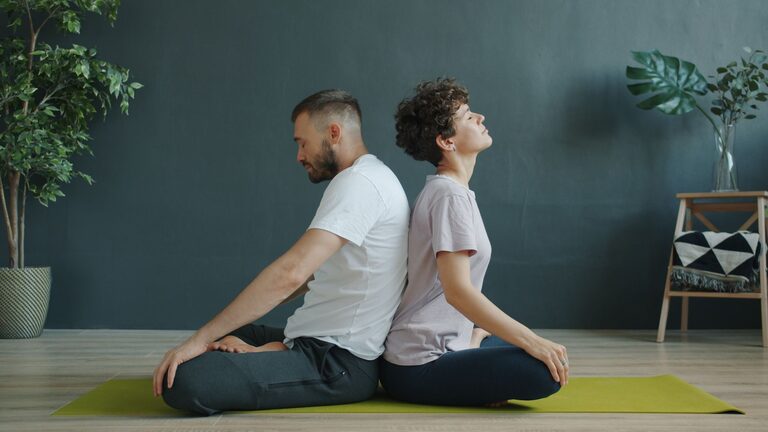
What Is a Mindful Breathing Break?
A mindful breathing break is a short pause to notice your breathing and reconnect with the present moment. It does not require special equipment, a quiet room, or a large block of free time. Even one or two minutes can create a useful transition between activities.
The goal is not to breathe in a perfect way or force yourself to feel calm. Instead, you gently pay attention to the natural rhythm of your breath. When your mind wanders, you notice it and return your attention to breathing.
These breaks can fit into many parts of the day, such as before starting work, between meetings, during a commute, or before getting ready for bed.
Why Try Short Breathing Breaks?
Daily routines often move quickly from one task to another. A short pause can help you become more aware of how you are feeling and what you are doing before you continue.
Mindful breathing breaks may help you:
– Create a clear transition between tasks
– Notice tension in your body
– Reduce the feeling of rushing
– Return attention to the activity in front of you
– Build a simple mindfulness habit
– Take a short screen-free pause
The benefits may be subtle at first. You might simply notice that you feel more settled or aware of your surroundings. There is no need to measure the success of each break. The practice is the act of pausing and paying attention.
Start With One Minute
Many beginners make the mistake of starting with a long session. A one-minute break is often easier to repeat, especially on busy days.
Try this simple practice:
- Pause and place both feet on the floor.
- Let your shoulders drop naturally.
- Notice the feeling of breathing in.
- Notice the feeling of breathing out.
- Continue for five to ten comfortable breaths.
- Open your attention to the room before returning to your task.
You do not need to change the speed or depth of your breathing. Simply observe what is already happening. If your attention drifts, gently bring it back without judging yourself.
Once a one-minute break feels familiar, you can try two to five minutes. Longer is not automatically better. A short practice that you repeat regularly can be more useful than an occasional session that feels difficult to maintain.
Choose a Comfortable Position
You can practice mindful breathing while sitting, standing, or walking. Choose a position that allows you to remain comfortable and alert.
When sitting, try the following:
– Keep both feet supported if possible
– Rest your hands loosely on your lap or desk
– Allow your back to be upright but not stiff
– Relax your jaw and soften your shoulders
– Keep your eyes open or closed, whichever feels more comfortable
You do not need to sit in a special pose. Comfort and ease are more important than appearance. If you are standing, keep your knees relaxed and notice the feeling of your feet on the ground.
For a walking break, slow down slightly and notice the connection between your breath and your steps. You can pay attention to one or two steps at a time without trying to control the rhythm.
Use a Simple Point of Focus
Breathing can feel abstract when you are new to mindfulness. Choose one clear place to notice the breath, such as:
– The air moving through your nose
– The rise and fall of your chest
– The movement of your abdomen
– The feeling of your clothing as you breathe
– The sound of your breathing
Select the point that feels easiest to notice. You do not have to monitor every part of the breath. A single point gives your attention a simple home.
If you find that focusing on breathing feels uncomfortable, shift your attention to your feet on the floor, the feeling of your hands, or sounds in the room. Mindfulness can include many kinds of present-moment awareness.
Do Not Force the Breath
A common beginner concern is wondering whether to breathe slowly, deeply, or in a particular pattern. For a basic mindful breathing break, there is no need to force a specific rhythm.
Let your breath remain comfortable and natural. Avoid taking unusually large breaths if they feel strained. The purpose is to notice breathing, not to perform it.
If you choose to count, use a light touch. For example, silently count “one” during an inhale and “two” during an exhale, continuing up to ten. Then begin again. If you lose count, simply return to one. There is no need to start over perfectly.
If you feel dizzy, uncomfortable, or unusually tense, stop counting and return to your normal breathing. You can also end the practice and take a few ordinary breaths while noticing your surroundings.
Work With a Busy Mind
Your mind will wander. You may think about an email, remember an errand, or notice a sound outside. This is a normal part of the practice, not a sign that you are doing it incorrectly.
When you notice that your attention has moved away, try this three-step approach:
- Acknowledge the distraction.
- Avoid criticizing yourself.
- Return gently to the next breath.
You can use a quiet label such as “thinking,” “planning,” or “hearing.” The label helps you recognize what happened without becoming involved in the thought. Then bring your attention back to breathing.
Every return is part of the exercise. The practice is not about keeping your mind completely empty.
Connect Breaks to Daily Activities
A regular cue makes mindful breathing easier to remember. Choose an activity that already happens each day and attach a brief pause to it.
Useful cues include:
– Before opening your computer
– After making a cup of coffee or tea
– Before starting a meeting
– After using the restroom
– When you finish one task
– Before checking your phone
– When you get into your car
– After turning off the lights
For example, you might take three mindful breaths before reading a new message. The break becomes part of the routine rather than another item on a long to-do list.
You can also set a gentle reminder once or twice a day. Keep the reminder simple and avoid creating pressure to practice perfectly.
Make the Practice Your Own
Mindful breathing does not have to look the same every day. On a busy day, take three breaths. When you have more time, sit for five minutes. If sitting does not suit you, try a walking break.
Consider keeping a short note about what works for you:
– What time of day feels easiest?
– Which position is most comfortable?
– Do you prefer open or closed eyes?
– Does counting help or distract you?
– Which location makes it easier to pause?
Use these observations to adjust your routine. A flexible practice is more likely to last.
A Simple Five-Minute Routine
When you are ready to try a longer break, use this structure:
Minute One: Arrive
Notice your feet, hands, posture, and surroundings. Let yourself pause before focusing on the breath.
Minutes Two and Three: Follow the Breath
Choose one point of focus and observe each inhale and exhale. Keep the breath natural.
Minute Four: Notice Distractions
If your mind wanders, acknowledge it kindly and return to breathing. Repeat as often as needed.
Minute Five: Reconnect
Notice the room, your body, and the next task you plan to do. Move on slowly and intentionally.
Keep Expectations Gentle
A mindful breathing break is not a test of concentration. Some days will feel easy, while other days may feel restless or distracted. Both experiences are part of learning.
Aim for consistency rather than perfection. One calm minute, repeated regularly, can become a practical way to add pauses to your day. Start small, stay comfortable, and let the practice develop naturally.