
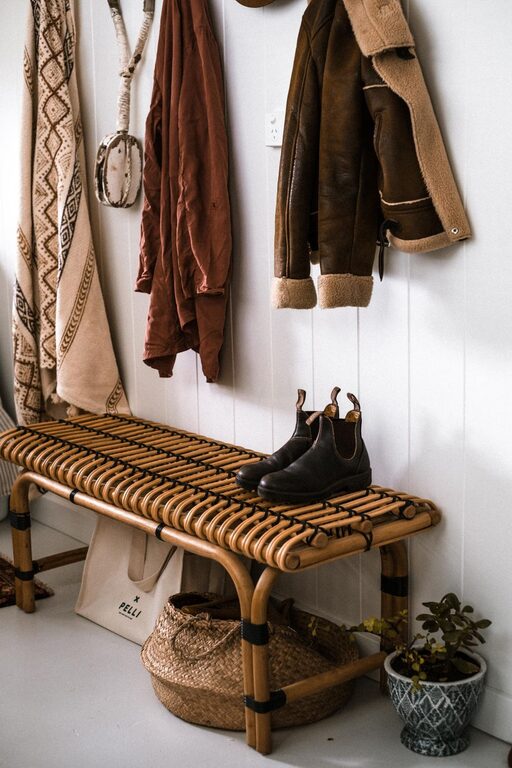
Your entryway is the first part of your home that you see and the last place you pass before heading out. Because it handles so much daily traffic, it can quickly become crowded with shoes, coats, bags, mail, and other items.
The good news is that an organized entryway does not need to be large or expensive. With a few practical storage solutions and simple daily habits, you can create a space that feels calm, useful, and welcoming.
Start by Clearing the Space
Before adding baskets, hooks, or shelves, remove everything from the entryway. Place each item in one of three groups:
– Keep in the entryway
– Move to another room
– Donate, recycle, or discard
Be thoughtful about what truly belongs near the door. Everyday items such as keys, shoes, and coats usually deserve a place in the entryway. Items that are only used occasionally may be better stored in a closet or another part of the home.
Once the area is empty, clean the floor, walls, baseboards, and nearby surfaces. Starting with a clean space makes it easier to plan and notice what the area needs.
Create a Drop Zone
A drop zone is a dedicated spot for items you bring into the home each day. It helps prevent belongings from spreading across tables, counters, and floors.
Depending on your space, a drop zone might include:
– A small tray for keys and sunglasses
– A basket for bags
– Hooks for coats and hats
– A container for mail
– A bench or stool for removing shoes
Keep the most frequently used items within easy reach. If an item is difficult to put away, it will probably end up somewhere else. Simple, convenient storage is more effective than a complicated system.
Use a Small Tray for Essentials
A tray can keep small items together and make them easier to find. Choose a tray that fits the size of your entryway table, shelf, or cabinet.
Use it for items such as:
– Keys
– Wallets
– Sunglasses
– Earbuds
– Access cards
Try not to let the tray become a catchall. Empty it regularly and return anything that does not belong there to its proper location.
Make Use of Wall Space
When floor space is limited, look upward. Walls can provide valuable storage without making a narrow entryway feel crowded.
Install a row of sturdy hooks for coats, jackets, hats, and reusable bags. Hooks are often more convenient than hangers because they allow you to put items away quickly. For a cleaner appearance, assign each household member a hook or two.
A wall-mounted shelf can hold baskets, small boxes, or decorative items. A peg rail offers flexible storage because hooks can be moved as your needs change.
Before installing anything, check the wall and choose hardware that can support the weight of the items you plan to store.
Organize Shoes by Frequency of Use
Shoes are one of the biggest sources of entryway clutter. Instead of keeping every pair near the door, store only the shoes used regularly.
Useful options include:
– A slim shoe rack
– A storage bench
– Stackable shoe boxes
– Open cubbies
– A basket for casual footwear
Keep everyday shoes at the front and move seasonal or special-occasion shoes to a bedroom closet or larger storage area. If several people share the space, give each person a designated shelf, cubby, or basket.
A washable mat placed near the door can help protect the floor from dirt and moisture. Shake it out or clean it regularly so it continues to do its job.
Add Baskets for Loose Items
Baskets are useful for items that are difficult to organize individually. They can hold scarves, gloves, hats, pet supplies, or reusable shopping bags.
Choose baskets that fit beneath a console table, inside a cubby, or on a shelf. Label them if multiple people use the space. Clear labels make it easier to return items to the right place.
Avoid filling baskets with too many different categories. For example, one basket for winter accessories is easier to maintain than a single basket containing mail, shoes, toys, and scarves.
Set Up a Simple Mail System
Mail can quickly cover an entryway table or kitchen counter. Create one clearly defined location for it.
A wall file, letter tray, or small basket can work well. Sort mail as soon as possible into categories such as:
– To read
– To respond to
– To file
– To recycle
Remove unwanted advertisements and empty envelopes right away. Set a regular time, such as once or twice a week, to deal with important papers. Keeping paper from building up will make the entire entryway feel more orderly.
Choose Furniture That Fits the Space
Entryway furniture should match the size and layout of the area. A large cabinet may provide plenty of storage, but it can make a narrow hallway feel cramped.
For a small entryway, consider:
– A narrow console table
– A floating shelf
– A slim shoe cabinet
– A wall-mounted organizer
– A storage bench with a small footprint
Measure the available space before buying anything. Leave enough room for people to walk comfortably, open doors, and carry bags through the area.
A storage bench can be especially useful because it provides both seating and hidden storage. Use the inside for shoes, seasonal accessories, or items that need to be returned to another room.
Create a Return Spot for Items
Many entryway items are not meant to stay there. Library books, packages, borrowed items, and things that belong in other rooms can easily pile up.
Place a small basket or box near the door for these items. Whenever you leave the house or move through the home, take one or two items with you and return them to their proper locations.
This simple habit prevents the entryway from becoming a permanent holding area.
Keep the System Easy to Maintain
An entryway organization system works best when it is simple enough to use every day. Schedule a quick reset at the end of each day or week.
During a reset:
- Put shoes on the rack or in their assigned space.
- Hang coats, hats, and bags on hooks.
- Remove trash and unwanted mail.
- Return misplaced items to other rooms.
- Wipe surfaces and sweep the floor if needed.
A five-minute reset can make a noticeable difference. Encourage everyone in the household to participate by giving each person clear storage space.
Adjust Storage by Season
Your entryway does not need to hold every item all year. Rotate storage as the seasons change.
During colder months, keep coats, gloves, scarves, and boots easy to reach. In warmer months, move bulky winter items to a closet or storage bin and make room for light jackets, hats, and outdoor accessories.
Seasonal rotation reduces crowding and helps you notice items that are no longer being used. It is also a good opportunity to clean storage bins and check whether anything needs to be repaired, donated, or replaced.
Add a Welcoming Touch
Organization and style can work together. Once the practical storage is in place, add one or two simple decorative details.
Consider:
– A mirror
– A small plant
– A framed print
– A neutral runner
– A decorative bowl
– A soft lamp
Choose items that fit the space without taking away from its function. Keep surfaces mostly clear so the entryway remains easy to use and clean.
The best entryway organization system is one that suits your home and your daily routine. Start with the items that cause the most clutter, give them convenient storage, and build a habit of resetting the space regularly. Even a few small changes can make your entryway feel more spacious, practical, and inviting.